
Stage Two (a): Clinical Training
The first year of clinical training: the main schools of TA, and putting them into practice
Introduction
Stage Two (a) is the second year of our counselling and psychotherapy training, and your first year of clinical training. Building on the Foundation Certificate in TA Theory, it moves from learning about TA to using it: how the different schools of TA understand change, how to assess what a client brings, and how to plan the work.
It is also the year many trainees begin a voluntary placement as a trainee counsellor, working with clients under the guidance of a clinical supervisor. To see how the stages lead to registration and accreditation, visit our qualification framework.
What a fabulous place to learn to be a ‘feelings doctor’. Excellent teaching and learning with a sense of humour, which is much needed.
Always such a welcoming and safe space to learn and explore in. Great teaching and brilliant coursemates. You feel very supported and like Connexus really want you to succeed.
Connexus has given me a new sense of purpose and knowledge that I don’t think I would have got at any other learning institute. It’s like a family, but you are all on the journey together.
I have learned an incredible amount in my first two years. It’s changed my career path and the way I approach life and all my relationships.
What does Stage Two (a) cover?
Saturdays explore the theory: the main schools of TA and how each one understands change. Sundays are for counselling skills practice in small groups with skills assistants, building from short practice sessions to a skills assessment part-way through the year.
The areas covered include:
- The therapeutic relationship: building a working alliance, and understanding transference
- Relational needs: integrative approaches to what clients need from the relationship
- Contracting for change: agreeing goals with clients and defining the problem together
- The clinical journey: assessment, treatment planning, and making sense of confusion, conflict and deficit
- Diagnosis: an introduction to diagnostic models
- The Classical school: pathology and decontamination
- The Redecision school: redecision work, impasse theory and early script decisions
- The Cathexis school: reparenting and self-reparenting
- Radical Psychiatry: power, alienation and the social roots of distress, and the stroke economy
- Relational and Co-Creative TA: the emerging self and identity, unconscious process, and projective and transformational transferences
- Creative interventions: working creatively with unconscious process
- Ethics and professional practice: ethical frameworks, boundaries, and the responsibilities that come with therapeutic work
- Diversity and difference: how culture, identity and social context shape the therapeutic relationship
Assessment
Two 2,500-word essays on TA therapeutic approaches, an assessment of your counselling skills, a reflective learning journal, and reflective tutorials. If you begin a placement during the year, your supervisor also writes a report on your early clinical work.
What outcomes can I expect?
You finish with an understanding of how the different schools of TA approach therapeutic change, and the foundational clinical skills for safe, effective practice. You will have begun to develop your own therapeutic style, and many trainees will have taken the step from learning about therapy to practising it, supported by experienced supervisors.
Stage Two (a) leads on to Stage Two (b), which completes Stage Two and the requirements for the Diploma in Psychotherapeutic Counselling.
Who is it for?
Trainees who have completed the Foundation Certificate in TA Theory, or equivalent training, and want to become an NCPS accredited TA counsellor, a UKCP registered psychotherapist or a Certified Transactional Analyst. We welcome both graduates and non-graduates. If you have trained elsewhere, contact us to talk about your application.
Now open for 2027-28
Length: 11 weekends over one academic year (150 hours)
Times: Sat 9:30 to 17:00 & Sun 9:30 to 16:00
Mode: Face-to-Face
Dates for this course are:
- 4 & 5 Sep 2027
- 2 & 3 Oct
- 30 & 31 Oct
- 27 & 28 Nov
- 22 & 23 Jan 2028
- 26 & 27 Feb
- 25 & 26 Mar
- 29 & 30 Apr
- 27 & 28 May
- 24 & 25 Jun
- 22 & 23 Jul
Cost: £3,400 (inclusive of VAT)
Instalment payment plans available
More Information?
Let us know if you have any questions
Meet the tutors
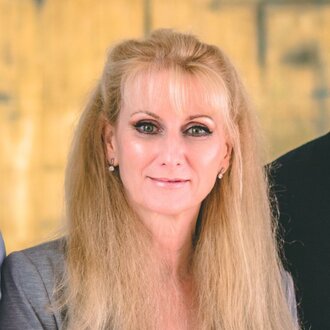
Lisa Bedford-Cooper
MSc.TA Psychotherapy, Dip Psych, Dip Couns, CTA(P), TSTA(P), UKCP Reg Psychotherapist and Supervisor. Lisa has been a director of International Training and Management Development for multi-national corporations and held clinical leadership of a respected international psychology company. She has also been a Consultant Trauma specialist for one of the UK’s leading emergency service providers. Lisa holds an MSc in Transactional Analysis, is an internationally approved trainer, and is a UKCP registered psychotherapist and clinical supervisor. She combines her extensive knowledge of training and management development with her passion for TA, to make the learning at Connexus stimulating, inclusive and always relevant.

Nancy Dalton
Nancy Dalton, CTA (P), is a Certified Transactional Analyst with a thriving counselling and psychotherapy practice in Tunbridge Wells and online. Drawing on many years of senior-level experience in the healthcare sector, she brings both depth and practicality to her therapeutic work. Nancy is passionate about developing the next generation of mental health professionals and in addition to offering specialised CPD courses, serves as a continuity tutor at Connexus. She is equally committed to enhancing the therapeutic experience for clients, bringing warmth and expertise to every session.

Louise Herbert
Louise is a UKCP-registered psychotherapist (CTA-P), a Provisional Teaching and Supervising Transactional Analyst, PTSTA (P) and a clinical supervisor with a thriving practice in Lewes and Hove. Having first discovered Transactional Analysis through a TA101, she has since developed a deep commitment to the field. At Connexus, she brings her enthusiasm for learning and growth to her role in supporting students.