
An Introduction to Eco TA
Working Ecologically: Transactional Analysis in Alliance with Earth
Is the ecological crisis finding its way into your therapy room? Have you wondered what it would be like to take your work outdoors?
For many of us, the state of the natural world is no longer something we or our clients can leave outside the door. This two-day course is a rich and grounding place to start thinking about what that means for your practice.

Eco TA is the practice of Transactional Analysis in alliance with Earth. It extends TA theory outwards to include our relationship with the natural world. These are two days of experiential learning, some of it outdoors on Brighton's beach, that can shift how you understand yourself, your clients, and your place in the wider web of life.
Day One lays the philosophical and theoretical groundwork for Eco TA, including eco script and ecological self-exploration, through discussion, case study and an outdoor exercise on the beach.
Day Two moves into the practicalities of working outdoors, including outdoor dyad work, again on the beach. We also take a detailed and thorough look at an outdoor, ecological session, using the shape of that session as the framework for exploring the whole practice: its practical, ethical and relational dimensions. Key topics act as prompts for discussion, and the direction of the learning is co-created between Mary and the group.
No previous experience of outdoor work is needed, and accessible alternatives are available for all of the outdoor work.
What does An Introduction to Eco TA cover?
- Eco TA theory - how familiar TA ideas look when we include our relationship with the natural world: your eco script (your story about your relationship with nature and the earth), ecological life positions (the People OK, Planet OK model, which maps our collective relationship with the ecological world), and bringing ecological awareness to our ego states
- Ecological self-exploration - reflecting on your own relationship with the rest of the natural world, through experiential and case study exercises
- Experiential and outdoor learning - hands-on solo and dyad work on Brighton beach
- The practice of working outdoors - the whole arc of an outdoor session (before, starting, during, closing and in between sessions), covering contracting, ethics, risk, and encounters with human and non-human others
- The needs of the ecological psychotherapist - therapist competence, self-care and supervision when working in this way
What outcomes can I expect?
This is an enjoyable and engaging weekend. You will:
- Understand the theoretical foundations of Eco TA and apply them to yourself and your practice
- Gain practical skills for working outdoors with clients, including contracting, keeping the work safe and contained, and pacing it so clients feel supported
- Build the confidence to navigate the ethical and relational dimensions of outdoor work
- Leave with a grounding in what it means to be an outdoor psychotherapist and to bring ecological awareness into your practice
- Receive a 12-hour Connexus Institute CPD Certificate recognising your participation
Who should attend?
This training is perfect for psychotherapists, counsellors and trainees who are interested in taking their practice outdoors or in bringing an ecological sensibility to their work.
Dates: Sat 8th & Sun 9th May 2027
Length: 2 days (12 CPD hours)
Times: 9:30am to 4:30pm
Mode: In person at Connexus Institute, Brighton, with outdoor work on Brighton beach (please bring waterproofs in case of rain)
Cost: £260 (inclusive of VAT)
More Information
Let us know if you have any questions
Meet your course leader
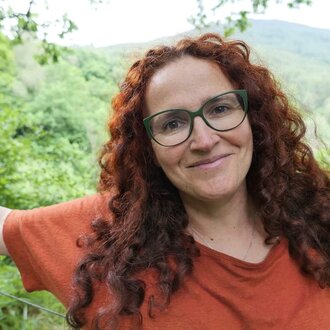
Mary Dees
Mary Dees MSc (Env), CTA (P), PTSTA (P) is a UKCP registered ecological psychotherapist, supervisor and trainer working on the border of Greater Manchester and the Peak District, where she runs outdoor psychotherapy and supervision groups. She works systemically, including with deep adaptation to the climate emergency and biodiversity crisis. Mary is also an environmental scientist with a Master's degree, and runs learning programmes including Climate Change Programmes for NHS leaders. She is part of the Transition movement and runs Climate Cafés and grief rituals. Mary's chapter, "How to Love this World: Becoming an Ecological Practitioner", appears in Ecotherapy: Theory, Research, Practice & Education (2nd edition, April 2026), edited by Joe Hinds, Hayley Marshall and Martin Jordan.